Elisabeth Kübler-Ross Foundation
Online Learning

Courses drawn from Elisabeth Kübler-Ross's own work, and from leaders in hospice, palliative care and grief.


Learn More

The Elisabeth Kübler-Ross Foundation carries forward the work of Dr. Elisabeth Kübler-Ross, the Swiss-born psychiatrist whose 1969 book On Death and Dying opened a conversation about dying that medicine had long avoided, and who spent the rest of her life campaigning for hospice care and for the dying to be heard.
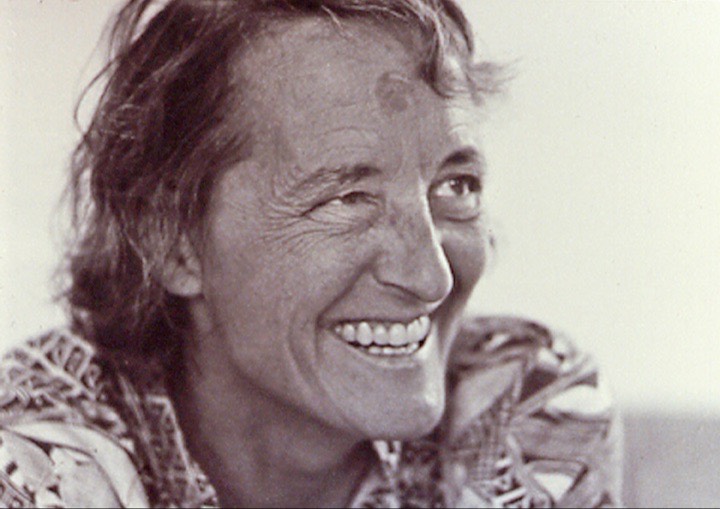
Dr. Elisabeth Kübler-Ross is the author of two dozen books, translated into 44 languages. On Death and Dying was named one of the New York Public Library's Books of the Century, and she was named an "unsung hero" of 20th-century science by TIME (1999).

The EKR Foundation works to increase access to quality hospice and palliative care around the world, to encourage compassionate care of the dying and the grieving, and to teach what Elisabeth taught, through its courses, its archive, and its international chapters.

The Foundation also works with filmmakers, authors, and publishers to bring Elisabeth's published work to new audiences. To learn more about her life and work, visit our main website at ekrfoundation.org.


SIGN UP NOW
From Elisabeth:


”
People are like stained-glass windows. They sparkle and shine when the sun is out, but when the darkness sets in, their true beauty is revealed only if there is a light from within.


See Available Courses

Video Poster Image
What others are saying...


”

Thanks in large part to Dr. Kübler-Ross’s great achievements, our society has made major advances in dealing with death and dying


-Mark Siegler, MD, American Journal of Bioethics


”

It was the work of Kübler-Ross, through writing, audiotapes and videotapes, that gave these patients the opportunity to tell their stories about what they were going through.


-David Magnus, PhD, Bioethics Dept., Stanford University


”

She single-handedly initiated the current transformation we are experiencing around Western culture's responses to death, dying and the bereaved.


-Joanne Cacciatori, PhD, Miss Foundation


”

Elisabeth Kübler-Ross added how we die to the agenda of cultural revolutions taking place in realms of the environment, social rights, and health care.


-Ira Byock, MD


”

"On Death & Dying" is one of the most important humanitarian works on the care of the dying written in the Western world


-Allan Kellehear, MD


”

It is not coincidence that the woman who taught us so much about death and dying as a process was truly the greatest champion of life.


Muhammad Ali

Available Courses

The Kübler-Ross Change Curve®

$79

One-time Payment

  • Loss and change, from Elisabeth's original 1969 model, not the boardroom version
  • Where the organizational use began: families in her workshops
  • What each stage looks like in practice, and why explaining change tends to backfire
  • Two tracks: leading others through change, and facing it yourself
  • For leaders, coaches, clinicians, and anyone guiding others through change
BUY NOW

The Five Stages of Grief®

$79

One-time Payment

  • Each stage in the words of the people she interviewed
  • Why the stages are not a sequence and not a checklist
  • How the stages moved from the dying to those experiencing change and loss
  • HOPE: the thread through all five
  • The pioneers Elisabeth worked alongside
  • The most rigorous class in the series — not a quick tour of five stages
BUY NOW

On Death and Dying

$79

One-time Payment

  • An overview of the 1969 book and the interviews behind it
  • What dying patients taught Elisabeth, in their own words
  • More than five stages: the full picture, and what the summaries left out
  • Hope, the thread that runs through every stage
  • What patients wanted from their doctors
  • Listening: the skill the whole book rests on
BUY NOW

The Four Quadrants

$79

One-time Payment

  • Learn Kübler-Ross's Four Quadrants as a model of health
  • Recognize imbalance in the Physical (Body) and how to restore it
  • Tend the Emotional (Heart) without being overwhelmed by it
  • Engage the Intellectual (Mind) without letting it crowd out the rest
  • Nurture the Spiritual (Soul) in yourself and those you serve
  • Bring all four into balance in your own life and your work with the dying
BUY NOW

Unfinished Business

$79

One-time Payment

  • Recognize countertransference before it shapes your care
  • Understand what "unfinished business" means at the end of life
  • Draw practical lessons from loss, your own and others'
  • Apply the Four Quadrants to whole-person support
  • Work through the regrets behind "If only I had…"
  • Practice with real-world case scenarios
BUY NOW

The Universal Laws of Kübler-Ross

$79

One-time Payment

  • The twelve universal laws Elisabeth taught in her Life, Death and Transition workshops
  • The natural emotions, and what happens when each one is distorted
  • Why she said the only thing we are responsible for is our own thoughts, words, and actions
  • Drawn from workshop material donated by Larry Lincoln, who led the workshops with her
  • For anyone who wants Elisabeth's teaching in her own words
  • Not a self-help course: her laws, as she taught them, with the sources
BUY NOW

Introduction to Dr. Elisabeth Kübler-Ross

$79

One-time Payment

  • What led Elisabeth to medicine, and to the dying
  • How the seminars at the University of Chicago began
  • What she was up against when she first sat down with dying patients
  • The fire that destroyed her Virginia home and workshop center in 1994
  • Her final years in Arizona
BUY NOW

The Trauma of Loss

$59

One-time Payment

  • The difference between grief and mourning
  • Why grief and mourning are necessary for our physical well-being
  • What epigenetics adds to the biology of loss
  • How emotion moves through the body
  • Two typical patterns of mourning
  • Ways of expressing grief to explore
BUY NOW

Grief and Bereavement in Childhood

$79

One-time Payment

  • Common misconceptions about how children grieve
  • Family-centered grief support, and what it looks like in practice
  • Matching support to a child's age, using Piaget's stages of development
  • Helping a child carry a loss into the rest of life
  • National and international resources for families
BUY NOW

Stay connected.


Submit your contact info to receive news and updates.